
The Long Way Home
Sitting at my parents’ dining room table—my temporary desk for the past several weeks—I reflect on the past few months of my life. And honestly, it feels like a blur.
For six weeks after knee surgery, I couldn’t put any weight on my right leg. In the beginning, it was strapped into what I came to think of as a medieval torture device—a giant hinged brace that held my leg straight, leaving me to awkwardly swing the thing around like dead weight as I maneuvered on crutches. Navigating my apartment became mildly hazardous, especially with the minefield of moving boxes, and something as simple as sitting down on the toilet became a logistical challenge.
Everything was harder. Everything took longer.
Even getting a cup of coffee from the kitchen to my desk required strategy. How exactly do you carry a cup of hot liquid while using crutches? You develop a route, of course. A sort of obstacle course. Nespresso machine to pull-out cutting board. Cutting board to kitchen table. Kitchen table to the glass-topped console table behind my sofa. Set it down. Maneuver forward on the crutches. Pick it up. Set it down again. Repeat. Eventually, coffee and I both arrived safely at my desk.
Sometimes I cried. Sometimes I had temper tantrums. I’d drop something, knock something over with my crutches, or simply reach the end of the day exhausted from the effort required to do things I’d never thought twice about before. And I had to ask for help. I don’t like asking for help. I don’t want to burden anyone. My instinct has always been, I can do it myself. I don’t need anyone. Except this time, I did.
And no one helped me more than my parents. They picked me up after surgery and stayed with me that first night. As I dismantled the apartment, they made trip after trip to help me move the things I couldn’t carry myself, hauling them back to their house and making room for me there, too. And when I finally moved out, they gave me a place to land for the two months before I left.
Sometimes I didn’t even have to ask. I’d be crutching my way toward the elevator, schlepping a bag of recycling in the same hand holding one of my crutches, and startle some poor neighbor who hadn’t seen me since surgery. “What happened to you?” Usually followed by, “Can I take that for you?”
And now? Now I’m struck by how anticlimactic it all was.
There had been so much planning and preparation. Weeks of Facebook Marketplace messages brought a steady stream of strangers to my door. And every so often, what began as a simple transaction became something more personal. Someone would tell me why they were looking for that particular thing, or where it was going. I was surprised by how easily complete strangers sometimes shared a little bit of themselves with me. Marketplace wasn’t exactly fun, but these little exchanges made it feel a little more worthwhile. They put a smile on my face and made me think, Eh, maybe this isn’t so bad.
Many of those stories seemed to involve starting anew in some way. A woman who had just bought a house was furnishing it and thrilled to find my nightstands and dresser at a price she could afford. An older gentleman who had been living in a halfway house was furnishing a new apartment. Another man came for a television I was giving away after his belongings had been stolen. He was gleeful that mine was better than the one he’d lost, and later sent me a photo of it set up in his apartment with a thank-you.
I loved their excitement over things I had chosen and lived with for years. These were things I loved, things that had made my apartment feel like home. It made me happy knowing someone else was excited to have them.
Meanwhile, I sorted through what would come with me, divided between shipping boxes and luggage. Other things went into storage, or to my parents and friends. And on August 14, I hired a junk removal service for the things nobody wanted. I’d chosen them in part because I understood that usable things would be donated when possible. I should have known better. It was right there in their name, after all. JUNK. And that’s how they treated my things. Carelessly. Sometimes brutally.
I was still a little over four weeks post-surgery and non-weight-bearing on my right leg, so there wasn’t much I could do but sit in the corner on one of the few chairs that hadn’t been taken yet and watch. At one point, one of the guys yanked the large drawer out of a little filing cabinet that was still in nearly perfect condition and began stuffing trash into it.
And when they were finally gone, after two hours of noise and disruption, I looked around my suddenly quiet and still apartment. It didn’t feel like home anymore. Empty, it seemed almost gray. There was no personality left. Without everything I’d accumulated around me over 20 years, I could suddenly see the apartment itself again—the peeling paint, the dirty carpet, the wear.
And then... August 15. I closed my apartment door behind me. I drove away, my little Prius packed, and didn’t look back. No emotion, really. I find that odd. Why didn’t I cry? Or feel wistful?
Because that came after, and still comes.
I feel it driving to and from physical therapy through the neighborhood where I spent my teenage years and where my parents still live. I’m struck first by how beautiful it is. Huge trees line the winding parkway, their leaves green, yellow and orange against a summer-blue sky. I pass streets I associate with high school friends and old crushes, streets I’d meant to drive down one more time before I left but never did.
And as if dismantling 20 years of my life wasn’t enough, I decided this would also be the perfect time to have knee surgery. The timing was ridiculous, but the opportunity made sense. I was still in a healthcare system I knew, in a city I knew, with a support system—my parents, friends, neighbors—nearby and time to recover before I left. Once I moved to Madrid, I had no idea when that particular window would open again.
For 20 years, I’d lived with a torn ACL. As long as I kept my leg strong, it felt strong. But somewhere in the back of my mind, I always knew how conditional that strength was. One wrong step could change everything. Eventually, it did. Now the old ACL has been replaced, the surviving meniscus repaired, and my right leg is finding itself again—its strength, its range of motion—and rebuilding. Back to its former self—no. It will never be that again. Maybe it will be better. Maybe worse. I won’t know until I rebuild it and find out what it’s capable of.
Perhaps the same is true of me.
I know some of what’s ahead. Madrid. Advanced TEFL training. Spanish language learning.
Since my first trip to Spain in 2023, the path has seemed to illuminate itself slowly in front of me. Not all at once. Just the next step. Then the next. I found the program. I got the visa. I found an answer—not necessarily to how I will make a living, but how I could. But I still don’t know where the path leads. The apartment is still unknown, the barrio I will call home. The people I will meet, the community I will join. Unknown.
And it scares me.
Who will I be now? Who will want to be my friend, love me, tolerate me? And will I let them?
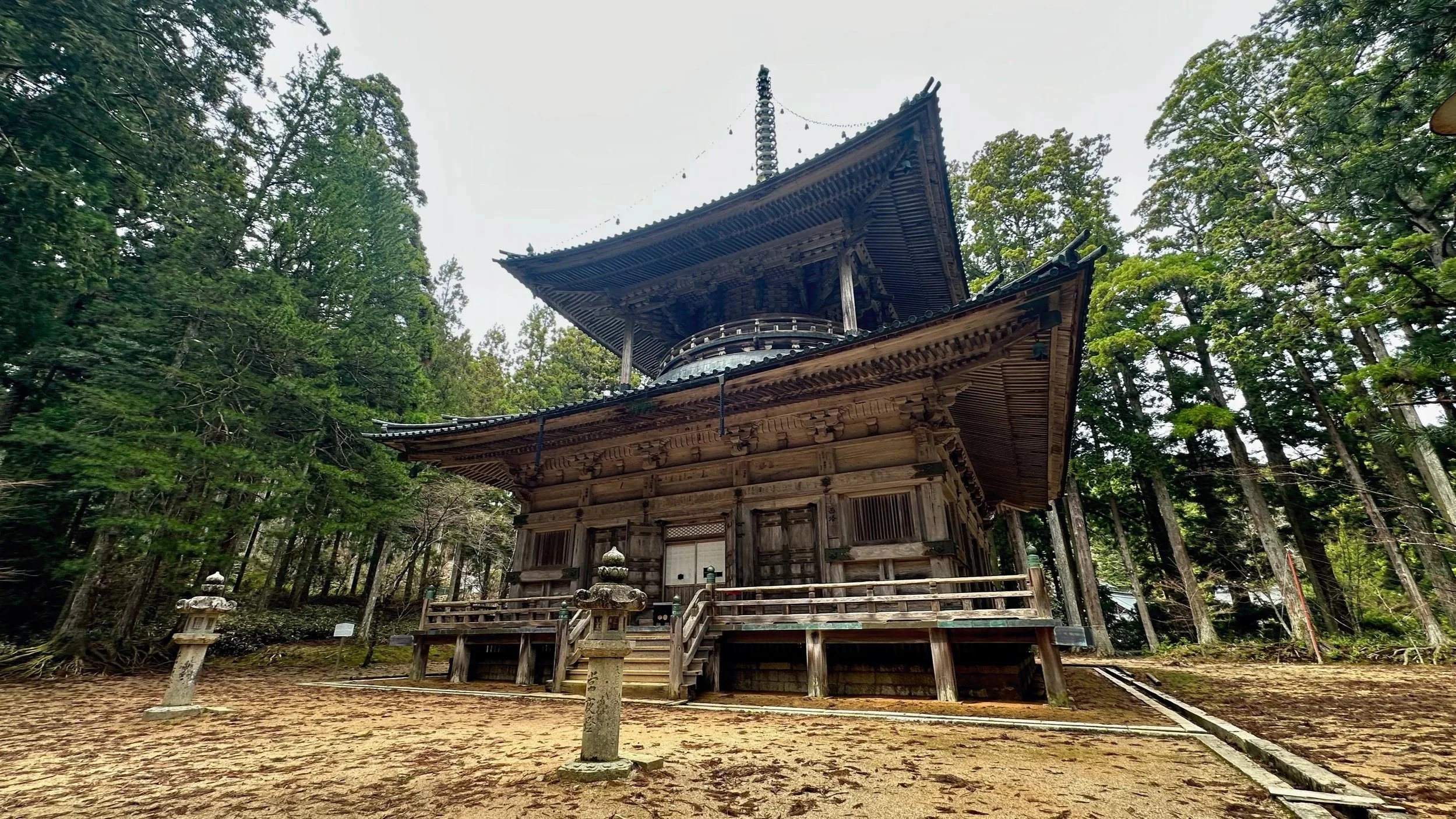
Danjo Garan Sacred Temple Complex – Koyasan, Japan
And again, as it so often does when I find myself reflecting, my mind wanders back to Japan. After the noise and pace of Osaka, Tokyo and tourist-heavy Kyoto, and a photography workshop that had disappointed me in ways I was still processing, we slowly wound our way into the mountains of Koyasan. Quiet. Cool. Damp. Shrouded in mossy green spiritual mystery. A place to slow down. Watch. See. Listen. Smell. Be.
Koyasan felt like a simple hug and a hush. There were tourists, but no one seemed loud. It was as if the atmosphere itself pressed down on everyone, creating a kind of reverence. High in the wooded mountains, Koyasan is the center of Shingon Buddhism and a training ground for monks. We stayed overnight in a shukubo, or pilgrim’s lodging, at Henjoko-in Temple. Before our simple—but still elaborate—vegetarian dinner, we bathed in the public baths and dressed in the provided yukata, remembering to fold left over right instead of the other way around, as one would dress a body for a funeral.
It was quiet, relaxing—a much-needed exhale. And for once, no cameras came out. There was no jockeying for position, no competition for the shot. We simply sat together, ate together, and became very warm and toasty as the sake began to quietly slip into our bloodstream.
After dinner, we gathered in our instructor’s room and traced illustrations of Buddhist deities in complete silence—a kind of moving meditation. When we finished, we wrote our names, the date, and a prayer or aspiration on our sheets. The next morning, they were blessed during a sacred service and returned to us before we left.
But my favorite part of Koyasan was the toilet. Well, not really, but let me tell you about this toilet.
Our room was simple—tatami mats, sliding paper screens, futon bedding, and a little sitting area overlooking the gardens. And then there was the most modern Japanese toilet I’d encountered on my entire trip. This thing was clearly top-of-the-line. When I opened the bathroom door, the lid lifted in greeting, glowing with a lovely blue light. “Welcome, my Queen,” it beckoned.
But the real highlight for me—beyond the toilet—was Okunoin Cemetery. It was misty and raining as we walked beneath enormous cedar trees, graves and monuments fanning out all around us. Everything felt old and slightly overgrown, the stone covered in varying degrees of rich green moss.
The place felt eerily peaceful. There was that heavy hush again, as if the spirits had a sort of weight. I don’t remember hearing the footsteps of the others, and no one spoke loudly. There was simply the sound of the forest around us. The damp permeated our clothes and filled our lungs.
Offerings of coins, figurines and drinks sat at the bases of the monuments. I found myself wondering about the people who had left them. Maybe a parent or a sister had ensured someone’s favorite drink was sitting there.
I felt myself wanting to sit down on the damp ground among the graves and just... listen. Maybe I hoped the spirits would talk to me. Whisper some guidance in my ear or something. I don’t know. I just felt their presence, as if I were surrounded by more than stone.
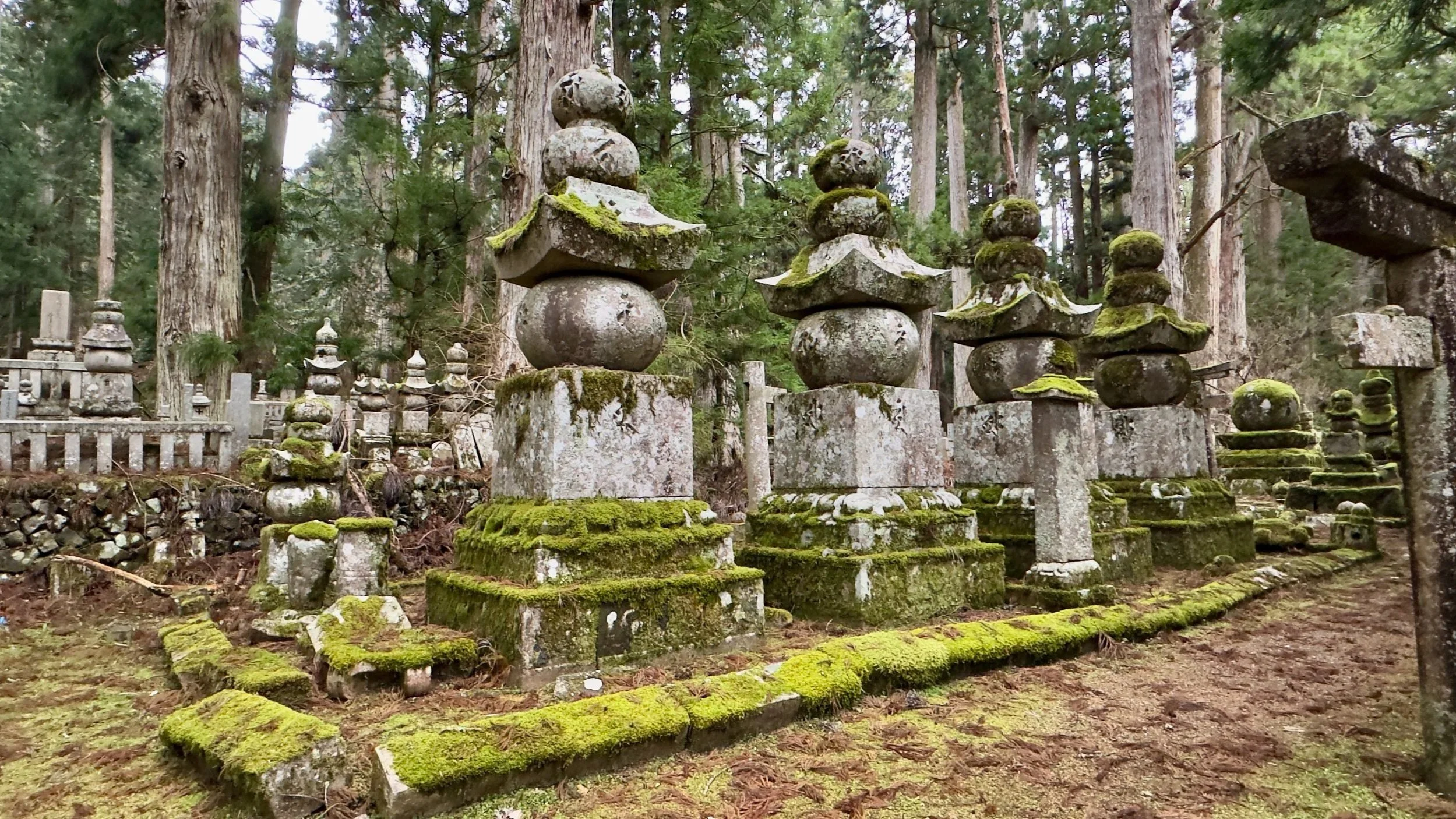
Okunoin Cemetery – Koyasan, Japan
I didn’t stop to listen then, but now I’m trying to.
I meet friends and former coworkers for lunches and happy hours, catching up and saying goodbye, sometimes after far too long. In between, there’s physical therapy, routine medical appointments and a haircut. I ensure there’s time for normal things with my parents too—cooking dinner, having cocktails.
And I notice things.
After an appointment last week, I walked home. Except it isn’t home anymore. I did it deliberately. I hadn’t known the last time I’d made that walk would be the last. I hadn’t realized how completely surgery would incapacitate me, and by the time I was walking again, I’d already moved out. So rather than take the bus, I walked. I savored the walk—the trees, the buildings, the cafés I knew by heart but now, somehow, was trying to memorize. I teared up as I passed my building and looked through the gate into the lobby.
And I kept walking.
Technically, I can come back. I’ve subleased the apartment, and the safety net is still there if I need it. So will I? Will I live here again? Probably. But not like before. Not full time. Just enough, perhaps, that I won’t have to miss it quite so much.
Still, I’ve started to photograph as if I’m not. Perhaps I simply want to remember it like this. My parents. My friends. My beloved San Francisco. The backyard of the house I grew up in. The morning rituals. My dad grocery shopping. My mom tending to her kitties. The bright hibiscus flowers on the deck. Apples falling from their tree. Milo wondering what the hell is going on and why we’re here. Dad’s asiago jalapeño bagels loaded with cream cheese.
In my old bedroom, my parents still have my senior graduation portrait. I look at her. She was thinking mostly about going away to college, never imagining that one day she would sell nearly all her belongings and move to Spain with her cat. That summer, she would travel to Europe for the first time with her grandmother.
I look at her and think about what I would tell her now. Open your heart. Talk. Share yourself. You don’t have to say everything perfectly. Don’t let fear make your decisions for you.
Do things scared.