
The In-Between
After three weeks of traveling alone, joining a tour felt like an exhale I didn’t know I needed. I’d been solo before—Spain, Portugal, Scotland, Chile—but something about this stretch in Peru wore on me differently. Maybe it was the developing-country realities (don’t drink the water or eat the street food, stay diligent with altitude sickness prevention). Maybe it was the language gap. Maybe I was tired of being alone with my thoughts. Maybe it was simply time.
Whatever the reason, stepping into a group—one that bonded quickly, and had more solo travelers than I expected—felt grounding. Familiar. Warm. And Mary—our guide with her unmistakable laugh and an endless well of patience—drew us all in right away. She laughed often (and loudly), answered every raised hand with an encouraging “Tell me,” and somehow made a bus full of strangers feel like a little team.
We were all there for the same thing really: Machu Picchu, the legendary citadel in the clouds. UNESCO-recognized, postcard famous, one of the New Seven Wonders of the World. The place so many dream of, and around which the tour was ultimately built.
But as I sit here writing this weeks later, sorting through the hundreds of photos and scribbled notes from that whirlwind week, it’s not Machu Picchu that rises first in my memory. It’s Urubamba—the quiet, the calm, the peace before the “hell yeah.”
Urubamba was the in-between—the place that so often gets rushed through on the way to something extraordinary. But in hindsight, it was the part of the journey that taught me the most about slowing down, about presence, about savoring what’s right in front of me instead of sprinting toward what’s next.
And maybe that’s why it’s lingering with me now.
Valleys Make the Mountains
After getting acquainted at dinner the night before in Lima, we caught an early flight to Cusco and began the long, winding drive through the Sacred Valley. Terraced hillsides, patchwork farms, blue skies tucked between towering mountains, and small towns where our bus barely fit through the streets. Families and shop owners stepped in and out of doorways, dogs claimed corners, life moved at its own pace with no urgency at all. And in that simplicity, I felt something I didn’t know I’d been missing: quiet, ease, belonging.
And just beyond those quiet towns, tucked inside another curve of the valley, was my first real glimpse of how long people have shaped and lived with this land.
The Salt Mines of Maras were the first thing on the trip that really caught my attention—partly because (in my hungry state) they looked uncannily like rows of goat-cheese slices, and partly because they were simply stunning. Thousands of terraced pools—whites, browns, grays—shimmering under a bright, billowy-cloud sky.
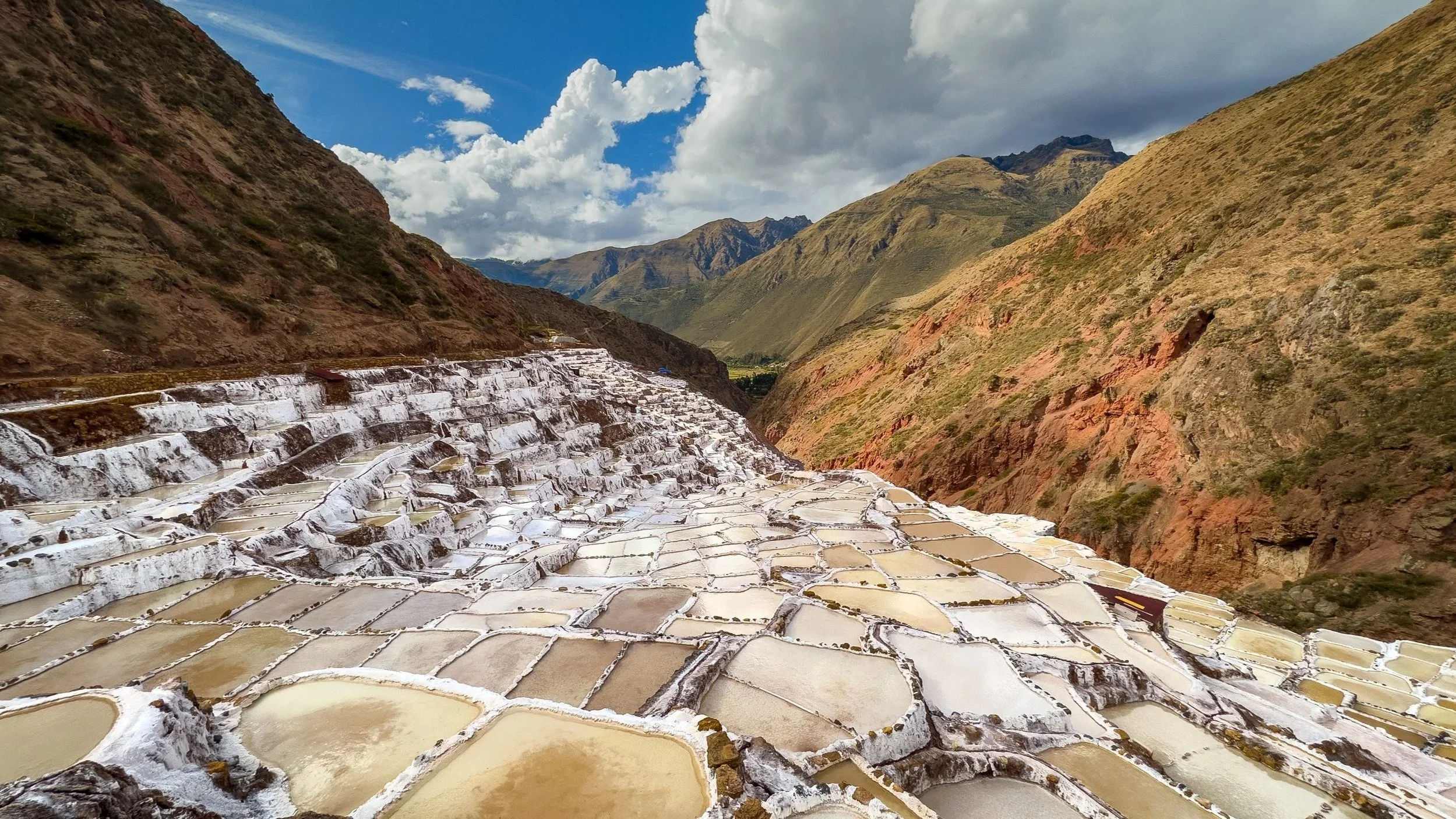
Salt Mines of Maras — Urubamba, Peru
These aren’t abandoned ruins or museum pieces—they’re living mines, worked the same way they’ve been for more than 2,000 years. Each pond fills with mineral-rich water from a subterranean spring. The sun evaporates it, salt crystals form, and workers scrape them by hand before refilling the pool and beginning again. Three to six thousand pans repeating this quiet ritual, month after month. A steady, ancient rhythm—and a soft foreshadowing of the resilience we’d witness in the days to come.
I remember thinking: Could a life like this—repetitive, tangible, physical—feel simpler than the one I spent 20 years building? Or would it just challenge me in different, unseen ways?
Maybe both.
The next day brought us to another place shaped by centuries of hands and heritage—Parque de la Papa (Potato Park)—where the community of Pampallacta works to preserve the biodiversity of the humble potato. Over 1,300 varieties live here, the heartland of a crop with more than 4,000 native types across Peru.
We sat surrounded by little baskets of pinks, purples, yellows—strange shapes, all sizes—before stepping into a dim straw-roofed hut where the women of the community came together to demonstrate their weaving traditions. Vegetables, flowers, even tiny crushed beetles became vibrant natural dyes for alpaca wool.
Yes, I bought a baby alpaca scarf.
Yes, it is soft as buttah.
Lunch came after that: cuy (aka, guinea pig) served in the traditional way. Unsettling to look at, surprisingly tasty (somewhere between chicken and something gamier). But what stays with me isn’t the taste of this notorious Andean delicacy. It’s the warmth of the afternoon: the sun, the flowers, the blue sky, the laughter over a simple Peruvian game that reminded me of skee-ball at Chuck E. Cheese. And a group gently, playfully becoming something like a family.
Later that afternoon, we climbed the ancient terraces of Ollantaytambo. Stone steps, sweeping valley views, storehouses tucked into cliffsides. We climbed, breathless and joking that it was good practice for Machu Picchu. The late-afternoon light hit the ruins of the massive Inca fortress just right—warm gold, long shadows—a moment I wish now I could have bottled.
And then the rainstorm—sudden, fierce—trapping us in a restaurant doorway after dinner. A soaked stray dog darted in, trembling. The staff let him stay. We lingered together, laughing, waiting out the storm.
Such small moments. The kind we aren’t supposed to remember. And yet I do—vividly—because they carried the warmth of home.
The End Everyone Expects
Machu Picchu came next.
The place of postcards. Bucket lists. “What was your favorite part of the trip?” The expected answer is obvious—Machu Picchu. And for the record, everyone said it was. Including me.
But like Lake Titicaca, it’s… complicated. And it deserves its own story.
Here, in this post, I want to stay with the part that surprised me: the in-between. The quieter valley. The place that felt more alive, more human, more present.
Urubamba was the reminder I didn’t know I needed.
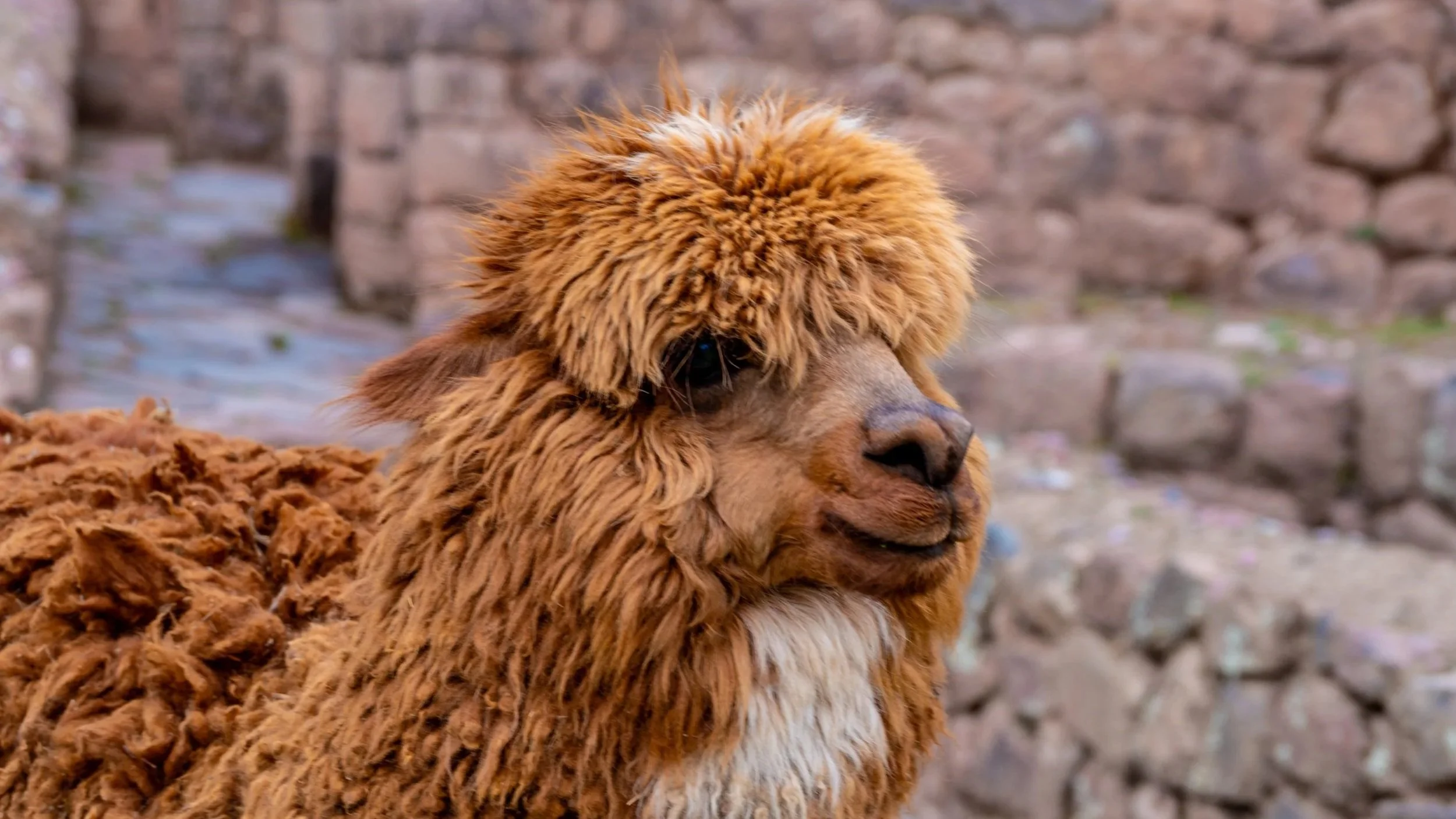
A local who refused to take me seriously — Sacred Valley, Peru
The Lesson of the In-Between
Looking back now, Urubamba wasn’t a pause on the way to something grand. It was something grand. Just in a softer, quieter way.
And maybe that’s why I’ve been thinking so much about what’s next—about Spain, learning Spanish, the teaching credential course I just signed up for, the move, whatever awaits me there. The path is illuminating. Momentum is building. And my old habits—the corporate ones—push me to rush ahead, strategize, plan, optimize.
But if I’m not careful, I’ll miss these last months of my “old life” at home: dinners with my parents, hikes through the Presidio, photographing golden hour at Marshall’s Beach, celebrating Grandma’s birthday at Spanish Bay without her for the second year, holiday martinis with friends at Monte’s Bar, the sound of the waves off our lanai on Ka’anapali Beach at Christmas.
All the Urubambas in my life.
I’ve written about this before—this tug-of-war between racing ahead and remembering to slow down. Probably because I’m still unwinding decades of conditioning that taught me to push, to plan, to chase the next thing. You don’t unlearn that overnight. You remember, you forget, you remember again. Maybe that’s what this in-between season really is—the slow, patient learning of a different way to live.
I don’t want to create new regrets by rushing into the next chapter so fast that I forget to live in this one. Not again. Not now.
So this is my reminder—and maybe yours, too:
Don’t sprint toward the Machu Picchus of life.
Don’t overlook the valleys.
Don’t skip the quiet places that steady you.
The in-between is where you learn who you’re becoming—and what kind of life, love, and future you’re finally ready to choose.
Follow my journey on Instagram @odiseabyemmy. For more photography from the Sacred Valley and beyond, visit Emmy Photography.